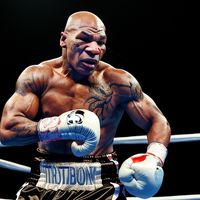
Mike Tyson, once the embodiment of raw power in the boxing ring, returns to the squared circle at the age of 58, a stark contrast to his youthful debut in 1985. Back then, the then-18-year-old Tyson needed only a minute and 47 seconds to force his opponent, Hector Mercedes, to concede defeat, marking the start of an illustrious, yet tumultuous, career. Fast forward 39 years, and "Iron Mike" is set to lace up his gloves for a professional match against 27-year-old YouTuber Jake Paul at the AT&T Stadium, home to the Dallas Cowboys. This event comes over 7,000 days since Tyson's last professional bout, a loss to Kevin McBride nearly two decades ago, and follows an exhibition fight four years prior where Paul was just beginning his professional journey on the undercard of that same event.
The original July match was delayed due to Tyson's ulcer flare-up. As athletes age, regaining peak physical and mental condition becomes increasingly challenging, and in boxing, the neurological risks are particularly pronounced. Dr. Nitin K Sethi, a clinical associate professor of neurology at Weill Cornell Medical College, suggests that Tyson, having endured a lifetime of head impacts, could be at an elevated risk of neurological damage. Boxing commissions often deem fighters over 40 as "high risk" for sustaining further injuries. Sethi, who also serves as a ringside physician, expresses concern over the potential for severe traumatic brain injuries in older fighters and the chronic neurological injuries that can result from years of professional boxing. We have reached out to Tyson for comment on any health concerns he may have regarding his upcoming bout with Paul.
Boxing stands out as a unique sport, with its objective being to strike the opponent, primarily in the head, to achieve a knockout. This inherent aspect of the sport brings with it specific health concerns. As a ringside physician, Sethi is all too familiar with the frequency of concussions in boxing. He notes that if he were to stop every fight at the first sign of concussion-like symptoms, boxing as a sport would cease to exist. However, the true danger of boxing extends beyond the dramatic knockouts that excite spectators. Long-term repercussions can stem from the cumulative effects of repeated head impacts sustained throughout a fighter's career and training. Sethi emphasizes that these head injuries and impacts accumulate, leading to chronic neurological injuries in boxing, which he considers a more significant issue.
Unlike the visible signs of knockouts and concussions, the effects of these repeated blows often go unnoticed until after a fighter's career has ended. Boxers may develop symptoms or conditions such as sleep disorders, chronic dizziness, post-concussive symptoms, Parkinsonian signs, and chronic traumatic encephalopathy (CTE) long after retirement. Sethi believes that equal attention should be given to the impact of repeated head blows on a boxer's brain during their career and how to protect them from long-term neurological issues. The susceptibility to neurological complications increases with age. For instance, the New York State Athletic Commission's medical standards manual lists factors that can categorize boxers as "high-risk combatants," such as being over 40 and having over a year of inactivity since the start of their professional career. Many legendary boxers, including Sugar Ray Robinson, George Foreman, Evander Holyfield, and Larry Holmes, have fought past the age of 40. Sethi explains that the age of 40 is used as a cutoff because older fighters are more likely to get hurt or have a harder time recovering from a concussion compared to younger brains. He points out that the propensity for injury and the detrimental effects of age on the healing process are both concerns. Tyson fits both categories, as he will be fighting at 58 and has not had a professional fight since 2005. According to the Texas Department of Licensing and Regulation (TDLR), which has sanctioned the professional fight, boxers over 36 must submit recent electroencephalogram or electrocardiogram test results, measuring brain and heart activity, before a fight. The TDLR has stated that these test results must be favorable for a fighter to be approved to compete. The TDLR has approved the professional bout between Tyson and Paul with certain waivers, including an eight-round fight with two-minute rounds and both boxers wearing 14-ounce gloves.
Brain injuries in boxing are not a new phenomenon. As early as 1928, American scientist Harrison Martland described boxers exhibiting concussive symptoms as being "punch drunk." Other terms used to describe a fighter's neurological state after a significant match include dementia pugilistica and slug nutty. Besides additional neurological testing during a fighter's career, Sethi believes more can be done to protect fighters and prevent long-term neurological damage. He suggests that change must come from within the boxing community, with boxers, their families, and retired boxers advocating for safer practices. The culture of boxing, where no one ever says "no more," needs to shift, according to Sethi. He encourages boxers to recognize when it's time to say "no mas" and step away from the sport. Despite the health risks and calls from some medical associations, including the World Medical Association, to ban boxing, it remains a popular sport due to its explosive nature, compelling storylines, and colorful personalities. Tyson has contributed significantly to the sport's appeal throughout his long and often controversial career. However, as he steps into the ring on Friday, the potential neurological impact he may face could overshadow the excitement of his return.

By Samuel Cooper/Dec 6, 2024

By Sophia Lewis/Dec 6, 2024

By Benjamin Evans/Dec 6, 2024
By Benjamin Evans/Dec 6, 2024

By Joshua Howard/Dec 6, 2024
By Benjamin Evans/Nov 20, 2024

By Natalie Campbell/Nov 20, 2024

By Sophia Lewis/Nov 20, 2024

By Daniel Scott/Nov 20, 2024
By Sarah Davis/Nov 20, 2024

By Lily Simpson/Nov 20, 2024
By David Anderson/Nov 20, 2024
By Sarah Davis/Nov 20, 2024

By Laura Wilson/Nov 20, 2024

By Natalie Campbell/Nov 20, 2024
By Emily Johnson/Oct 15, 2024
By Victoria Gonzalez/Oct 15, 2024
By Benjamin Evans/Oct 15, 2024

By Lily Simpson/Oct 15, 2024

By James Moore/Oct 15, 2024